ACS323 Assignment
Intelligent Systems
Academic Year: 2023/2024
Module:ACS323
Title:Intelligent Systems
Date Set:01/12/2023 at 10:15 am
Date for Submission: 22/12/2023 at 14:00
Staff Member Responsible: Professor M Mahfouf
PLEASE READ THE WHOLE DOCUMENT CAREFULLY
MATLAB-SIMULINK, WITH ALL THE NECESSARY TOOLBOXES, WILL BE NEEDED TO CARRY-OUT THIS ASSIGNMENT
THERE IS NO LIMIT TO THE NUMBER OF PAGES YOU MAY WISH TO SUBMIT
• This work is worth 30% of your overall mark for this module
• PARTS A & B carry equal weighting of 50 Marks each
• You are reminded that the submitted work must be personal.
• Submitted work using GEN-AI with all its variants, e.g. ChatGPT or otherwise, will be considered as use of Unfair Means
• Before grading the work, each report will be subjected to a Turnitin report first
PLEASE READ ALL OTHER ANSCILLARY MATERIAL THAT SUPPORTS THIS ASSIGNMENT SHEET VERY CAREFULLY TO ENSURE THAT YOU ARE SUBMITTING ALL WORK MATERIAL IN THE REQUIRED WAY, AND IN PARTICULAR:
“instructions on how to provide acs323 assignment files 2023 2024.pdf”
PART A- FUZZY DECISION-MAKING
Consider the process relating to muscle relaxation, as seen in your Laboratory Session PART A, represented by the following Equations [PLEASE NOTE THE NEW VALUE RELATING TO THE PREDOMINANT TIME-CONSTANT- CHANGE IT IN YOUR MATLAB-SIMULINK MODEL]:
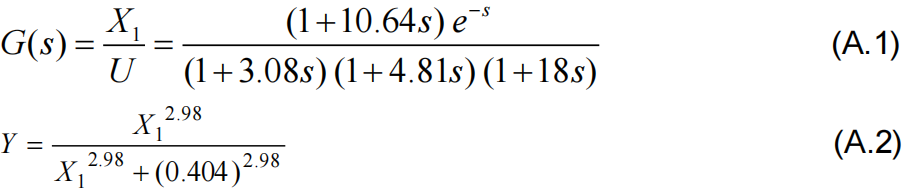
where Y is the overall output of the system (muscle relaxation), U is the input to the system (amount of drug infused).
The main objective is to design a closed-loop control strategy which should maintain a steady level of muscle relaxation (output ‘Y’) by manipulating the level of drug infused (input ‘U’), given a reference target of muscle relaxation (‘Ref’)- see Figure A1- Use a reference target of 0.8 all throughout and a simulation time of 300 minutes:
a) Simulate this process in closed-loop, via SIMULINK, just by using a simple negative feedback loop and show/explain how difficult it is to maintain an accurate level of muscle relaxation (output) in response to a target relaxation value.[3 MARKS]
b) Design a Fuzzy PI-type controller, as shown in Figure A1, via a fuzzy rule-base which should include 25 fuzzy rules with Gaussian Membership Functions. [The candidate is expected to use: 1. the fuzzy 3D surface to tune the rules; 2. their knowledge of tuning the PID tuning factors, all in order to obtain the best possible outcome for the output response in terms of minimum overshoot, fast rise-time and fast settling-time; include simulations with disturbances]. [16 MARKS]
c) Transform the fuzzy rule-base designed in A)b) into a Fuzzy PD-type controller which should also include 25 fuzzy rules with Gaussian Membership Functions. [The candidate is expected to use: 1. the fuzzy 3D surface to tune the rules; 2. their knowledge of tuning the PID tuning factors, all in order to obtain the best possible outcome for the output response in terms of minimum steady-state error, minimum overshoot, fast rise-time and fast settling-time; include simulations with disturbances]. [16 MARKS]
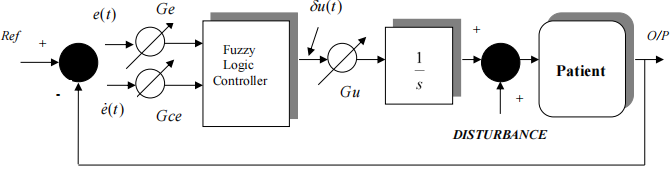
Figure A1- Fuzzy-PI Control of Muscle Relaxation
d) Using the closed-loop data from A)c) derive an ANFIS based controller for the process, which is described by Equations (A.1) and (A.2), to achieve a similar control performance as that in c). What would be the advantages of such a new system? [10 MARKS]
PART B- FUZZY PREDICTIVE MODELLING
On Black-Board, you will find one (1) file named “acs323assignmentdata.mat” (in the folder “Module Assignment”) relating to industrial data. This data set should reflect a system with four (4) inputs (Input 1, …, Input 4) and one (1) output. The minimum and maximum values for all inputs and outputs in the provided data can be found using the “min” and “max” MATLAB commands.
Upload this file onto your local drive which you will subsequently use to carry-out tasks B)a)-B)e) in MATLAB.
Once you have uploaded this file in MATLAB and double-clicked on it, it will collapse into two (2) files: one file, “acs323assignmentdata”, contains the actual quantitative data, and the second file, “explanation”, provides details on the names for each of the five (5) data features.
[The student will partition the data accordingly, select the most appropriate type of fuzzy MFs, output function and the number of learning epochs which will lead to the best outcome in the least-square sense]. [18 MARKS]
b) Using the model derived in B)a) find the values of the output for the following input vectors:
Input 1 = 0.06; Input 2 = 0.28; Input 3 = 0.4; Input 4 = 0.012; [4 MARKS]
c) Extend the fuzzy modelling exercise conducted in B)a) to include 4 membership functions for each input, then 5 membership functions for each input. Here also, the fitness of the models should be assessed with the use of a quantitative index (or indices) such as the RMSE, MSE or MAE to establish the validity of the models.
[The student will partition the data accordingly, select the most appropriate type of fuzzy MFs, output function and the number of learning epochs which will lead to the best outcome]. [18 MARKS]
d) Using the models derived in B)c) find the values of the output for the following input vectors:
Input 1 = 0.06; Input 2 = 0.28; Input 3 = 0.4; Input 4 = 0.012;[4 MARKS]
e) Compare the models derived in B)a) and B)c) and draw your own conclusions with respect to model accuracy and generalisation properties as far as: 1. Data partitioning between training and testing; 2. The number of fuzzy MFs, are concerned. [6 MARKS]